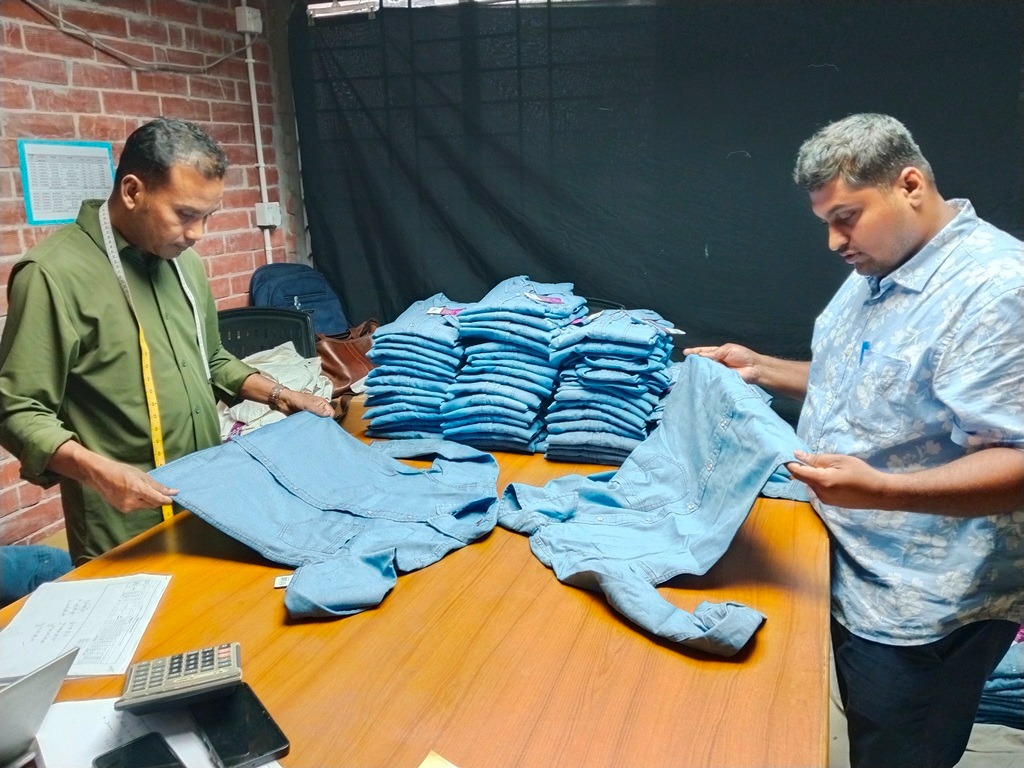
BQF Final Random Inspection (FRI) / Pre-Shipment Inspection (PSI)
The Final Random Inspection (FRI)—also known as a Pre-Shipment Inspection (PSI)—is the most critical quality control milestone in your supply chain. It takes place only when 100% of the production run is completed and at least 80% of the goods are fully packed into export cartons.
Acting as your final line of defense, the FRI ensures that substandard products are caught and corrected at the factory, preventing costly international shipping disputes, customs rejections, or widespread consumer returns.
The Anatomy of an FRI: Step-by-Step Execution
A BQF quality engineer physically visits the manufacturer's facility to conduct the inspection using an objective, systematic protocol:
[ 1. Carton Counting ] ──> [ 2. Random Sampling ] ──> [ 3. On-Site Testing ] ──> [ 4. AQL Evaluation ]
1.Step 1: Total Lot Verification & Carton Counting:Quantity & Completeness Verification.
The inspector counts the total number of finished and packed export cartons to verify that the factory has produced the exact quantity ordered. If the lot size is incomplete, the inspection is put on hold.
2.Step 2: Unbiased Sampling via ISO 2859-1:Statistical Random Selection.
Using international sampling tables (ANSI/ASQ Z1.4 / ISO 2859-1), the inspector randomly draws samples from various layers and positions of the packed cartons. The factory staff is strictly prohibited from pre-selecting these samples.
3.Step 3: Comprehensive Workmanship & Physical Testing:Functional & Safety Screen.
Every sampled item is cross-checked against your product specifications (tech packs, artwork, size charts, and the approved Golden Sample). The inspector runs a series of mandatory on-site tests (e.g., bar code scan, drop tests, functional checks).
4.Step 4: Defect Classification & Final Reporting:Pass/Fail Decision Tree.
Defects are logged and classified as Critical, Major, or Minor. The cumulative defect counts are measured against the predefined Acceptable Quality Limit (AQL) thresholds to deliver an objective Pass / Fail result within 24 hours.
Critical Checkpoints During Pre-Shipment Inspection
During an FRI, BQF looks beyond individual product cosmetic flaws to evaluate the shipment as a whole entity:
Checkpoint Category | Key Inspection Parameters |
Quantity Verification | Full piece counts, carton counts, and assortments across sizes/colors. |
Workmanship & Aesthetics | Surface defects, structural alignments, open seams, assembly gaps, and cleanliness. |
Product Specification | Accurate colors (Light Box evaluation), dimensions, weights, and material composition. |
Functional / On-Site Tests | Electronic safety screenings, cartoning drop tests, fitting tests, and barcode scannability. |
Marking & Labeling | Shipping marks, country of origin (Made in X) stamps, care labels, and retail barcodes. |
Packaging & Packing | Retail polybag configurations, export carton durability, and moisture-absorbing silica gel verification. |
Understanding the AQL Matrix for Final Approval
To make a reliable, evidence-based shipping decision, BQF uses the standard Acceptable Quality Limit (AQL) framework. This mathematical model determines the maximum allowable number of defects before a batch is rejected.
Defect Class | Definition | Standard AQL Limit | Example (Lot Size: 3,200 pcs / Sample Size: 125 pcs) |
Critical Defect | Safety risks, regulatory violations, or bio-hazards (e.g., trapped needles, mold, exposed wires). | 0 | Max Allowed: 0 (1 Critical defect rejects the entire lot) |
Major Defect | Functional failures or prominent cosmetic flaws that reduce marketability or cause returns. | 2.5 | Max Allowed: 7 (8 Major defects reject the entire lot) |
Minor Defect | Small aesthetic variations that do not affect the utility, longevity, or function of the item. | 4.0 | Max Allowed: 10 (11 Minor defects reject the entire lot) |
The BQF Guarantee: An FRI gives you the hard data you need to withhold final payment or demand a factory factory rework before the goods leave port. Once the cargo is loaded onto an ocean vessel, correcting structural flaws becomes logistically impossible.