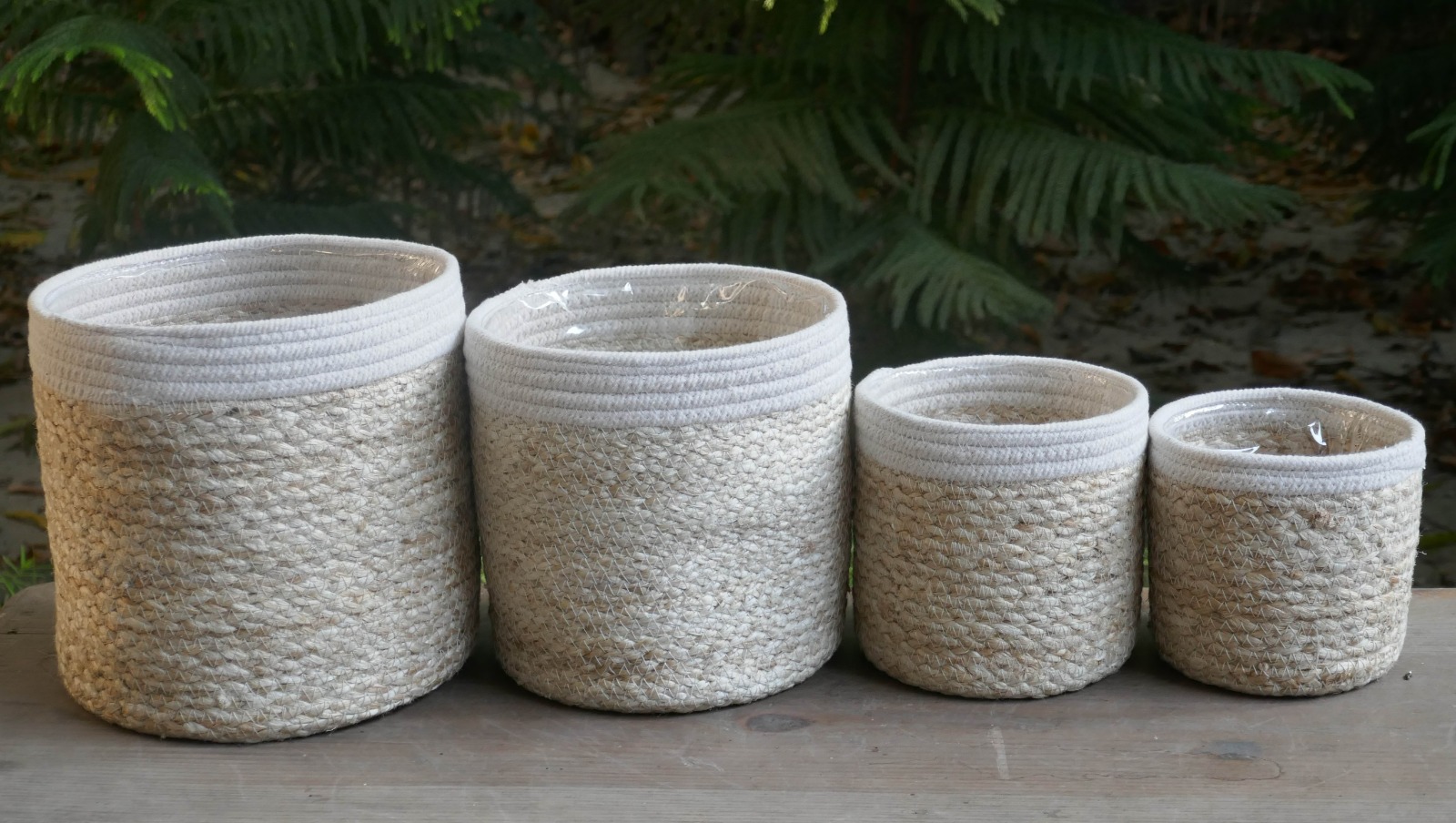
BQF Jute Products Inspection & Quality Control Standards
Jute—often referred to as the "golden fiber"—is a highly sustainable, biodegradable material widely used for eco-friendly packaging and consumer goods. However, because jute is a natural plant fiber, it is highly susceptible to variations in moisture content, agricultural contamination, raw weaving flaws, and organic odors. Without strict quality control, issues like structural rotting, mold growth, or uneven fiber density can ruin an entire shipment during maritime transit.
BQF provides professional, on-site quality control and inspection services for jute products across major manufacturing hubs in Asia. Our technical checklists cover all primary jute categories:
Packaging Materials: Jute gunny bags, sacking cloth, food-grade hessian bags (for coffee, cocoa, or grains), and onion bags.
Lifestyle & Consumer Goods: Jute tote bags, shopping bags, promotional items, wine bags, and laminated jute crafts.
Furnishings & Rugs: Jute carpets, area rugs, braided mats, twines, and geotextiles.
Key Natural & Manufacturing Defects Monitored
Our inspectors examine raw fiber preparation, weaving structures, and lamination quality to identify critical defects:
    [ Fiber & Weaving Flaws ]          [ Finishing & Assembly ]          [ Environmental Risks ]
   ───────────────────────────        ──────────────────────────        ─────────────────────────
   • Missing Picks / Loose Weave      • Poor Stitching / Open Seams     • High Moisture Content
   • Large Slubs and Knots            • Asymmetric Handles / Dimensions • Mold, Mildew, or Rotting
   • Oil Contamination (Hydrocarbons) • Uneven Print Registration       • Strong Batching Odors
Main On-Site Tests Performed During Jute Product Inspection
To ensure your production lot satisfies your quality benchmarks, global transit safety regulations, and food-grade standards (where applicable), BQF conducts rigorous physical testing protocols at the factory:
1.Moisture Content Verification:Critical Anti-Mold Check.
Because high humidity trapped inside shipping containers causes natural fibers to rot and breed mold, our inspectors use calibrated digital moisture meters to test multiple samples. Moisture content must strictly fall within tolerated industry limits (typically below 14-16% depending on product type).
2.Weight and Density (GSM/Porter & Shots):Structural Integrity Test.
We verify the structural density of the fabric by counting the warp (Porter) and weft (Shots) per inch. We also cut samples using a precision circular cutter to measure fabric weight ($g/m^2$) on a digital scale, ensuring it matches your specified thickness.
3.Hydrocarbon & Odor Screening:Food-Grade Verification.
For food-grade packaging (e.g., cocoa/coffee bean bags), we review factory processing logs to ensure the use of Food-Grade Vegetable Batching Oil (VO-treated) rather than mineral-based oils. A sensory odor test is performed to detect strong hydrocarbon or rancid smells that could taint edible cargo.
4.Load-Bearing & Drop Testing:Functional Durability Check.
For jute sacks and tote bags, we fill samples to their maximum rated weight capacity and execute drop tests from a standard height of 1 to 1.2 meters onto a hard surface. The seams, handles, and fabric body must withstand the impact without bursting or ripping.
5.Lamination & Print Adherence:Aesthetic & Barrier Test.
For shopping bags with internal plastic lining (LDPE/PP), we conduct peel tests to ensure the lamination will not separate from the natural fibers. Rub tests (Crocking) are executed on printed branding or logos to confirm dye and ink stability.
Defect Classification & AQL Standards
Following the internationally recognized Acceptable Quality Limit (AQL) framework, BQF categorizes jute defects to determine whether a production lot passes or fails inspection:
Defect Class | Common Jute Imperfections | BQF Inspection Action |
Critical | Live insects, rodent droppings, visible mold/fungus, moisture levels exceeding maximum safety limits, or prohibited non-food-grade oil on food sacks. | Automatic Lot Rejection |
Major | Severe structural holes, bursting or open side-seams, misaligned or weak handles, wrong product dimensions, or heavily smeared print logos. | Fails Quality Threshold if totals exceed AQL limits |
Minor | Light loose threads, small yarn slubs or natural color variations in the fiber, minor weaving irregularities, or slight packaging wrinkles. | Recorded & Monitored against acceptable limits |
The BQF Advantage: Natural jute behavior changes dramatically based on ambient climate and storage conditions. BQF’s strict focus on moisture control, seam strength, and hydrocarbon screening eliminates the risk of receiving molding, weak, or foul-smelling shipments at your distribution centers.