BQF Home Textile Inspection & Quality Control Standards
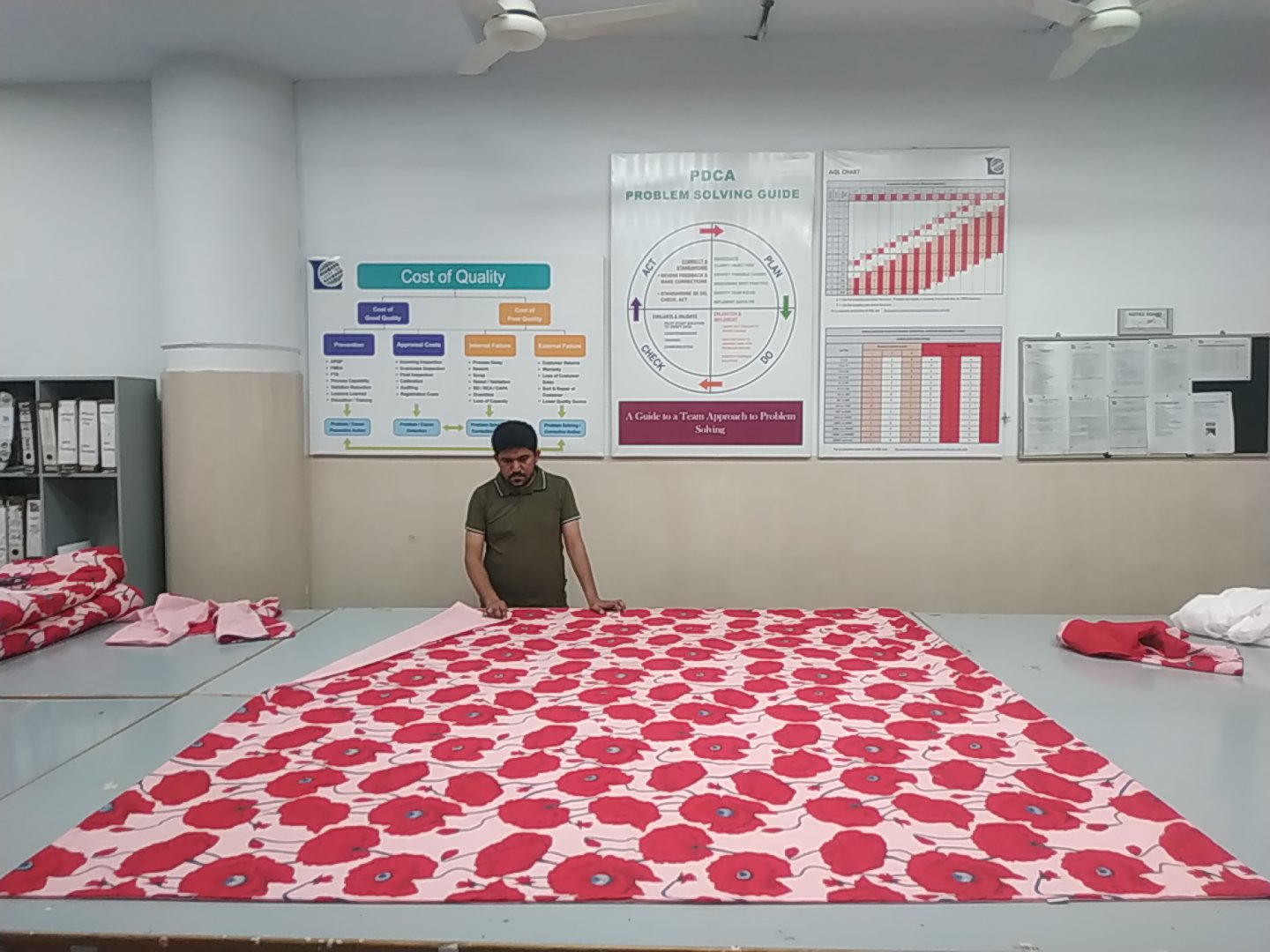
Home textiles encompass a diverse range of products that require a balance between aesthetic appeal, functional durability, and absolute consumer safety. Because these items are in direct contact with skin and are laundered frequently, inconsistencies in fabric weave, print registration, chemical treatment, or sewing construction can quickly lead to consumer returns.
BQF provides comprehensive on-site quality control services for home textiles across Asia, ensuring your products comply with international standards before they leave the factory. Our expertise covers all home textile product categories:
Bedding: Sheets, pillowcases, duvet covers, quilts, and comforters.
Window Treatments: Curtains, drapes, blinds, and valances.
Table & Kitchen Linen: Tablecloths, cloth napkins, runners, placemats, and oven mitts.
Upholstery & Cushions: Cushion covers, throw pillows, slipcovers, and floor mats.
Key Structural & Surface Defects Monitored
During an on-site inspection, our technical auditors examine the textile surface, structural seams, and filling distributions to identify potential defects:
    [ Fabric Defect ]               [ Sewing Defect ]             [ Finishing Defect ]
   ───────────────────             ───────────────────           ──────────────────────
   • Yarn Knots / Slubs            • Open Seams                  • Color Shading (Side/Center)
   • Missing Picks/Ends            • Skipped / Broken Stitches   • Uneven Fiber Filling
   • Print Misregistration         • Puckering & Wavy Hems       • Unpleasant Chemical Odors
Main On-Site Tests Performed During Home Textile Inspection
To ensure your production lot satisfies your quality standards and regulatory requirements, BQF conducts a rigorous series of physical and performance testing protocols at the factory:
1.Thread Count & GSM Check:Density & Weight Verification.
For bedding and linens, we verify the fabric construction (ends per inch and picks per inch) using a thread counter. We also use a precision GSM cutter and digital scale to confirm the fabric weight ($g/m^2$) matches your specifications.
2.Dimensional Stability & Shrinkage Prep:Sizing & Fit Check.
We measure length, width, depth (for fitted sheets), and component symmetry against your tech packs. Our inspectors look out for bowing and skewing to ensure products won't warp or twist out of shape after their first wash.
3.Color Shading & Light Box Review:Visual Quality Check.
Using a standardized light box (D65/TL84/CWF), we perform color shading checks between different dye lots, between panels of the same product, and against the approved golden sample. A rub test (Crocking) is conducted to verify dye stability.
4.Fastener & Zipper Fatigue Testing:Functional Hardware Test.
For duvet covers, cushions, and curtains, any integrated hardware (zippers, snap buttons, eyelets, velcro) is subjected to repeated open-and-close cycles to ensure smooth functionality and secure attachment strength.
5.Needle Detection & Contamination Scan:100% Safety Protocol.
To protect consumers from structural hazards, packed cartons or individual items run through an industrial metal detection system. This ensures no broken sewing needles, pins, or staples remain trapped inside dense layers or fiber fills.
Defect Classification & AQL Standards
Following the internationally recognized Acceptable Quality Limit (AQL) framework, BQF categorizes home textile defects to determine whether a production lot passes or fails:
Defect Class | Common Textile Faults | BQF Inspection Action |
Critical | Trapped metal fragments/needles, mold or mildew, severe chemical odors, or sharp exposed hardware. | Automatic Lot Rejection |
Major | Incorrect dimensions, open seams, prominent fabric holes, severe print misregistration, significant color bleeding, or uneven filling. | Fails Quality Threshold if totals exceed AQL limits |
Minor | Removable dirt marks, uncut loose threads, small yarn slubs, minor skipped stitches inside hems, or slight packaging wrinkles. | Recorded & Monitored against acceptable limits |
The BQF Advantage: Home textile items often involve massive fabric yardages where defects can easily hide. BQF’s systematic on-site random sampling and rigorous physical testing protocols ensure that fabric structural weaknesses, shading variations, and safety hazards are caught directly at the factory.