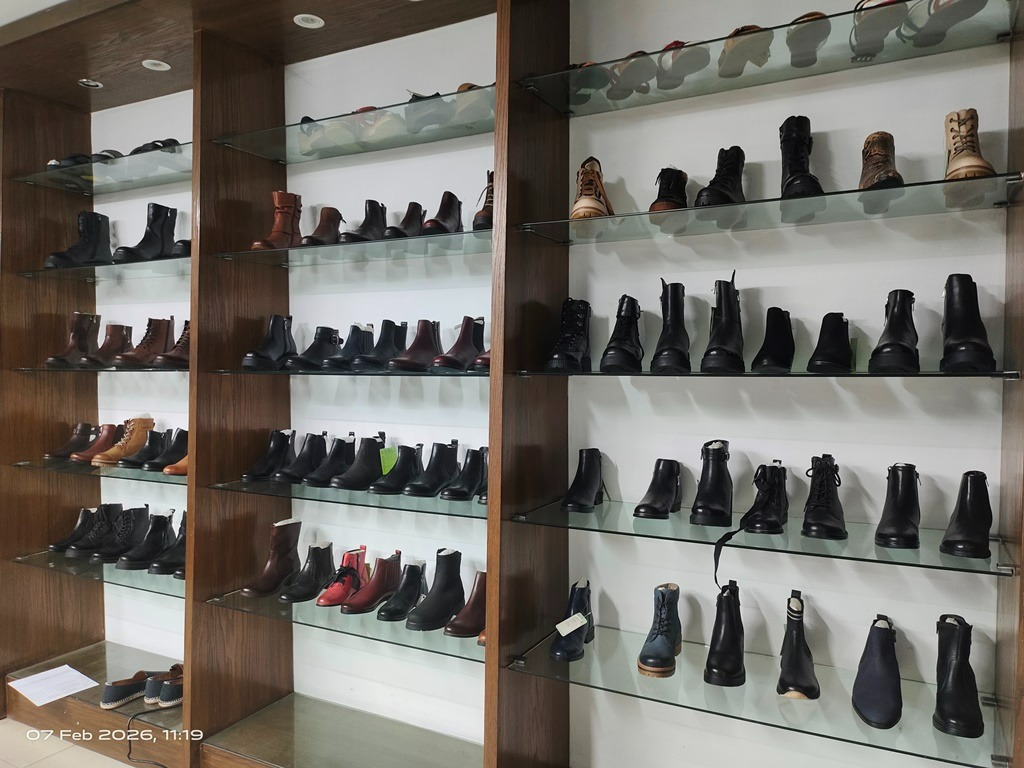
BQF Footwear Inspection & Quality Control Standards
The footwear market demands precision. Because shoes are subjected to continuous mechanical stress, friction, and diverse weather conditions, even a minor manufacturing oversight can lead to structural failure, product returns, and damaged brand reputation.
BQF provides comprehensive footwear inspection services across Asia, ensuring your products meet international safety, structural, and cosmetic standards before they leave the factory floor. Our expertise covers all footwear categories, including athletic shoes, leather dress shoes, boots, sandals, and children's footwear.
Critical Defects to Monitor in Footwear Manufacturing
During an on-site inspection, our technical auditors examine the entire shoe body to identify visual, structural, and material defects.

Our checklist specifically targets structural and aesthetic issues, including:
Assembly & Bonding: Checking for over gluing along the midsole, asymmetric uppers, and poor outsole bonding.
Stitching Integrity: Identifying broken stitching, poor stitching alignment, or over stitching that weakens the material.
Material Flaws: Scanning for soiled uppers, soiled lining, unexpected wrinkles in leather, or rubber blooming (white chalky residue) on the outsoles.
Main On-Site Tests Performed During Footwear Inspection
A visual check isn't enough to guarantee structural durability. BQF conducts a rigorous series of physical and mechanical tests on random samples from your production lot:
1.The Hand-Feel Saftey Check:Mandatory Safety Check.
Inspectors run their hands through the inside of 100% of the sampled shoes to detect any protruding staples, sharp nail points, loose rivets, or rough construction joints that could injure the consumer.
2.Flex & Bending Testing:Structural Integrity.
The footwear is subjected to repetitive flexing tests on both the outsole and the upper material to verify that the shoe can withstand walking mechanics without cracking, splitting, or separating at the seams.
3.Bonding & Peel Strength Test:Adhesive Verification.
A pull test is executed using specialized force gauges to measure the adhesion strength between the upper and the outsole. This ensures the shoes will not delaminate or peel apart under standard environmental heat and stress.
4.Symmetry and Sizing Verification:Fit & Alignment.
We align the left and right shoes side-by-side to cross-check precise symmetry. This includes measuring heel height, tongue length, back-height alignment, and verifying that the actual dimensions match your specific size charts.
5.Colorfastness & Rub Test:Aesthetic Durability.
We perform dry and wet rub tests on both the inner lining and the upper material to guarantee that dyes will not bleed or transfer onto a consumer's skin or socks.
Defect Classification & AQL Thresholds
Following the internationally recognized Acceptable Quality Limit (AQL) standard, BQF categorizes footwear defects to determine whether a production lot passes or fails:
Defect Class | Example Faults | BQF Inspection Action |
Critical | Protruding nails, sharp staples, mold growth, or banned chemical residues. | Immediate Lot Rejection |
Major | Sole separation, incorrect sizing labels, open seams, or severe color mismatch between the left and right shoe. | Fails Quality Threshold if totals exceed AQL limits |
Minor | Removable glue marks, minor loose threads, slight scuffing on the outsole base, or small packing wrinkles. | Logged & Counted against allowable tolerances |
The BQF Advantage: Footwear manufacturing involves complex manual assembly. BQF’s physical on-site testing protocols ensure that poor bonding, misaligned stitching, and safety hazards are caught at the factory—saving you from costly post-delivery returns.